August 5th, 2026
The fastest path to what you want is not through more effort. It is through less friction.
Nobody told you that. You were told to want it more, work harder, get up earlier.
Nobody told you to look at what you have built between yourself and the goal — the invisible architecture of bad thinking, weak habits, and comfort addiction that makes the path harder than it needs to be.
That architecture is friction. And it is costing you more than the hard thing itself ever has.
I know this because I built an enormous amount of it.
Bad thinking running before I got out of bed. No morning structure, which meant every day started from zero and I paid the full cost of beginning each time again.
A comfort addiction so embedded I didn't recognize it as addiction — I called it being realistic, taking things at my own pace, knowing my limits.
What it was: unnecessary resistance piled on top of already-difficult work, making the path feel impassable when it was only cluttered.
The work itself was never the thing stopping me. The friction around it was.
The hard things in front of you are unavoidable. The friction surrounding them is not. Removing it is the first job — not the last.
What Friction Actually Is
Friction is not the same as difficulty — and that distinction matters more than it might seem.
Difficulty is inherent. The work requires effort, discomfort, and the sustained willingness to do the uncomfortable thing before the comfortable alternative takes the day.
That difficulty cannot be removed and should not be. It is the point.
Friction is different.
Friction is the unnecessary resistance layered on top of the difficulty — the resistance that comes from the thinking you carry into the work, the habits that run before the work begins, and the pull of comfort that has never been deliberately interrupted.
When you feel like you lack discipline or motivation, friction is almost always what you are actually experiencing.
The path is not harder than you can handle. It is harder than it needs to be. And those are entirely different problems with entirely different solutions.
Remove the friction, and you become capable of significantly more — not because you changed, but because the path cleared.
The Three Forms of Friction in Your Way
Friction in daily life shows up in three specific forms. You are likely dealing with more than one of them right now without having named any of them.
The first is bad thinking.
This is the friction that runs before the day begins.
Before you have done a single thing to test your capacity, a story is already running — doubt about whether today will be different, a quiet resignation about the outcome, the low-level internal case being built against starting.
You do not solve bad thinking with affirmations. You interrupt it by taking action before it has had time to finish making its argument.
The second is weak habits.
When your morning has no deliberate structure, every day starts from zero. You pay the full friction cost of beginning again each time because nothing from yesterday carried forward into today.
Strong habits do not require rigidity. They require a sequence that moves you toward the important work before the day's demands pull you toward everything else.
Without that sequence, you are choosing between the work and the reactive morning every single day — and the reactive morning wins more than you realize.
The third is addiction to comfort.
This is the friction that operates in the small competitions — the ones you do not even notice you are having.
Stay in bed or get up.
Open email or open the work.
React to what arrived or initiate what matters.
Each individual choice feels minor. The accumulated pattern of those choices is the shape of the life you are living right now.
Comfort addiction does not announce itself as a problem. It announces itself as preference, as self-awareness, as knowing what you need. It is winning the day quietly, one micro-choice at a time.
The Morning Friction Audit
The morning is where your friction compounds or clears. What happens in your first hour sets the conditions for every decision that follows.
Before you begin the work each morning, ask yourself three questions. They take sixty seconds. The answers tell you exactly what friction is active and where it needs to be removed before you start.
What thought am I carrying right now that is making the first step harder?
Name it specifically. The doubt, the story, the resistance.
Naming it does not make it disappear, but it interrupts the automatic authority it has over what you do next.
A thought you have named is a thought you can choose to act against.
What does my morning sequence actually do?
Not what you intend it to do — what it actually does.
Does it move you toward the important work, or does it burn your best energy before the work begins?
Email first is friction.
The news is friction.
The phone before the work is friction.
Identify the specific habit in your morning that is costing you the most and place it after the important work instead of before it.
Where am I choosing comfort right now?
Not in general — specifically. What is the comfortable option competing with the important thing at this exact moment?
Naming both of them makes the choice visible. Visible choices can be made deliberately rather than defaulted to.
Three questions.
One friction source identified.
Remove it before you begin the work. Not all three at once.
The one costing you the most this morning: reduce or eliminate it before anything else starts.
Take Action This Week
Run this audit every morning this week before you start work.
Write down the answers.
The thought you are carrying. What your morning sequence actually does. The specific comfort pull competing with the important thing right now.
Writing the answers interrupts the automatic operation of each one. You cannot unconsciously comply with a pattern you have consciously named.
Then address one friction source each morning before you begin. If the thinking is the problem, take the first action before the thought finishes building its case.
If the morning sequence is the problem, move one friction-creating habit to after the important work.
If the comfort pull is the problem, name what it is competing with and delay it until after the work is done.
At the end of the week, look at what appeared most consistently.
The friction that shows up every day is the friction most worth permanently removing. That is where your real leverage is.
The path to what you want is not as long as the friction makes it feel.
Clear it first.
Then walk the resistance-free path.
How I Can Help You
For years I was applying effort against a life I had made unnecessarily difficult. Removing the friction — the bad thinking, the weak habits, the comfort addiction — was what finally made the path navigable.
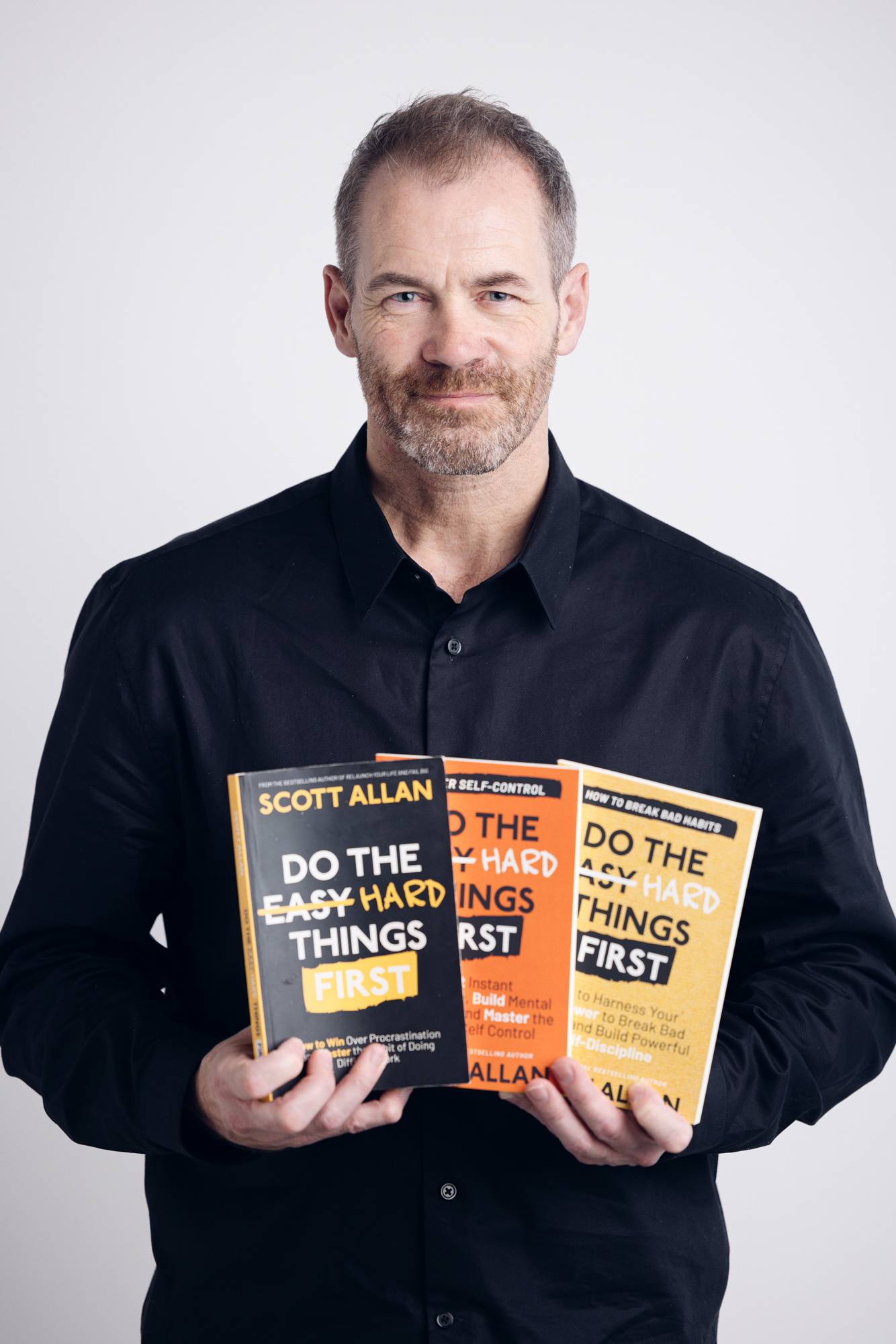
Do the Hard Things First is the complete system for doing exactly that.
→ Order Do the Hard Things First on Amazon
→ Or order directly from scottallanbooks.com
Want the full library? Scott Allan's Signature 16-Book Best Collection — sixteen books covering every hard thing across discipline, relationships, money, identity, and more.
Ready to go all in? The 30-Day Hard Things Challenge is thirty days of running the system — one hard thing first, every day.
→ Start the Challenge — Use promo code PROC10 for 10% off
 |
$5.00
Scott Allan
Hi, I'm Scott Allan...
Thank You for Your Support!
Your encouragement and support mean the world to me. If you’ve found... Read more |
