The Avoidance Audit: (Finding What You're Really Running From)
Do the Hard Things First Newsletter
You think you know what you're avoiding.
The workout. The project. The conversation. The task on your to-do list.
But that's the surface level. The thing you're avoiding is rarely the thing you're actually avoiding.
Underneath every avoided action is an avoided feeling. Underneath every postponed task is a deeper fear. The workout isn't hard—what's hard is facing the gap between who you are and who you want to be.
To stop avoiding, you need to see what you're really running from.
Surface Avoidance vs. Deep Avoidance
Surface avoidance is the thing you can point to:
- I'm avoiding the gym
- I'm avoiding that email
- I'm avoiding the conversation
- I'm avoiding starting the project
Deep avoidance is what's underneath:
- I'm avoiding feeling out of shape and judged
- I'm avoiding potential conflict or rejection
- I'm avoiding vulnerability and possible hurt
- I'm avoiding the possibility that I'm not good enough
You can force yourself to do the surface thing. But if you don't understand the deep thing, you'll find new ways to avoid. New surface behaviors that protect you from the same underlying fear.
Real change requires understanding what you're actually running from.
Use the promo code proc50 to begin your training at 50% off the price
The Five Hidden Avoidances
Most avoidance, when you dig deep enough, falls into one of these categories:
1. Avoiding Discomfort
The most basic avoidance. The thing is hard, unpleasant, or uncomfortable, so you don't do it.
But underneath "this is uncomfortable" is often a deeper belief: "I shouldn't have to feel discomfort."
This belief is the problem. Discomfort is the price of growth. Avoiding all discomfort means avoiding all progress.
Questions to ask:
- What discomfort am I trying to escape?
- What would happen if I accepted discomfort as part of the process?
2. Avoiding Failure
You don't start because you might fail. You don't try because you might not succeed. You stay in planning mode forever because planning can't fail.
Underneath is usually: "If I fail, it means something bad about me."
Failure feels like identity, not just outcome. So you avoid anything that risks it.
Questions to ask:
- What do I believe failure would mean about me?
- What's the actual cost of failing at this?
- What's the cost of never trying?
3. Avoiding Judgment
You don't share your work because people might criticize it. You don't speak up because you might look stupid. You don't ask because they might think less of you.
Underneath is usually: "Other people's opinions determine my worth."
So you hide. You play small. You avoid anything that invites evaluation.
Questions to ask:
- Whose judgment am I most afraid of?
- What do I believe their judgment would mean?
- Is their opinion actually more important than my growth?
4. Avoiding Change
You stay in the job you hate. The relationship that's not working. The city that doesn't fit. The life that feels too small.
Underneath is: "Change is dangerous. Better the devil I know."
Change means uncertainty. The unknown feels scarier than the unsatisfying known. So you stay stuck—not because you can't change, but because you're avoiding what change requires.
Questions to ask:
- What change am I avoiding?
- What do I believe will happen if things change?
- What's the cost of nothing changing?
5. Avoiding Yourself
The deepest avoidance. You stay busy so you don't have to think. You numb with scrolling, food, substances, entertainment. You fill every moment so there's no space to feel.
Underneath is: "If I stop and look at myself, I won't like what I see."
So you run. From stillness. From reflection. From the hard questions about whether you're living the life you actually want.
Questions to ask:
- What am I distracting myself from?
- What would I have to face if I got quiet?
- What truth about my life am I avoiding?
The Avoidance Audit Process
Set aside 30 minutes. No distractions. Pen and paper.
Part 1: Surface Inventory
List everything you're currently avoiding. Everything.
- Tasks you keep postponing
- Conversations you haven't had
- Decisions you haven't made
- Actions you know you should take
- Changes you've been "meaning to" make
Get it all out. Don't filter.
Part 2: Pattern Recognition
Look at your list. Ask:
- What's similar about these items?
- Are there themes? (Health? Relationships? Career? Finances?)
- When do I tend to avoid? (Morning? When stressed? When alone?)
- What's my favorite avoidance method? (Distraction? Busyness? Procrastination? Numbing?)
Patterns reveal the shape of your avoidance.
Part 3: Deep Dive
For your top 3-5 avoided items, go deeper:
What am I actually avoiding here? (Not the task—the feeling, the fear, the underlying thing)
What do I believe will happen if I do this? (What's the feared outcome?)
What do I believe it will mean about me? (What identity threat is present?)
What's this avoidance costing me? (Time? Opportunity? Self-respect? Relationships?)
Part 4: The Truth
After the deep dive, complete these sentences:
"The pattern of my avoidance reveals that I'm running from..."
"The belief driving most of my avoidance is..."
"The cost of continuing to avoid is..."
"The thing I most need to face is..."
What to Do With What You Find
Understanding your avoidance isn't enough. You have to act differently.
1. Start with the highest-cost avoidance.
Which avoided thing is costing you the most? That's your priority. Not the easiest thing to face—the most important.
2. Name the deep avoidance when you feel it.
When you notice yourself avoiding, ask: "What am I really running from right now?"
Naming it creates distance. You're no longer possessed by the avoidance—you're observing it.
3. Challenge the underlying belief.
Most avoidance is built on a belief that isn't actually true.
"Failure means I'm worthless" — Does it? Really?
"Their judgment determines my worth" — Does it? Actually?
"Change is too dangerous" — Is it? More dangerous than staying stuck?
Question the belief. Often it crumbles under examination.
4. Feel the feeling instead of fleeing it.
The feeling you're avoiding won't kill you. Discomfort passes. Fear diminishes with exposure. The thing you're running from is survivable.
What if you just let yourself feel it?
5. Do the surface thing anyway.
Even before you've fully processed the deep avoidance—do the thing.
Action often reveals what analysis can't. You'll learn more about your avoidance by confronting it than by thinking about it.
The Avoidance Audit Questions
Use these regularly:
- What have I been putting off that would change my life if I did it?
- What conversation keeps playing in my head that I haven't actually had?
- What do I do instead of facing hard things? (My avoidance strategy)
- What am I afraid people would think if they saw the real me?
- What truth about my life am I avoiding?
- If I stopped avoiding for 30 days, what would I have to face?
- What's the most expensive thing I'm currently avoiding? (Highest cost)
- What would my life look like if I stopped running?
Your Next Step
Do the audit. This week. 30 minutes.
Find what you're really running from.
Then pick one thing—one avoided action with a deep avoidance underneath—and face it.
Not perfectly. Not completely. Just face it.
The life you want is on the other side of what you're avoiding. To get there, you have to stop running.
Go Deeper
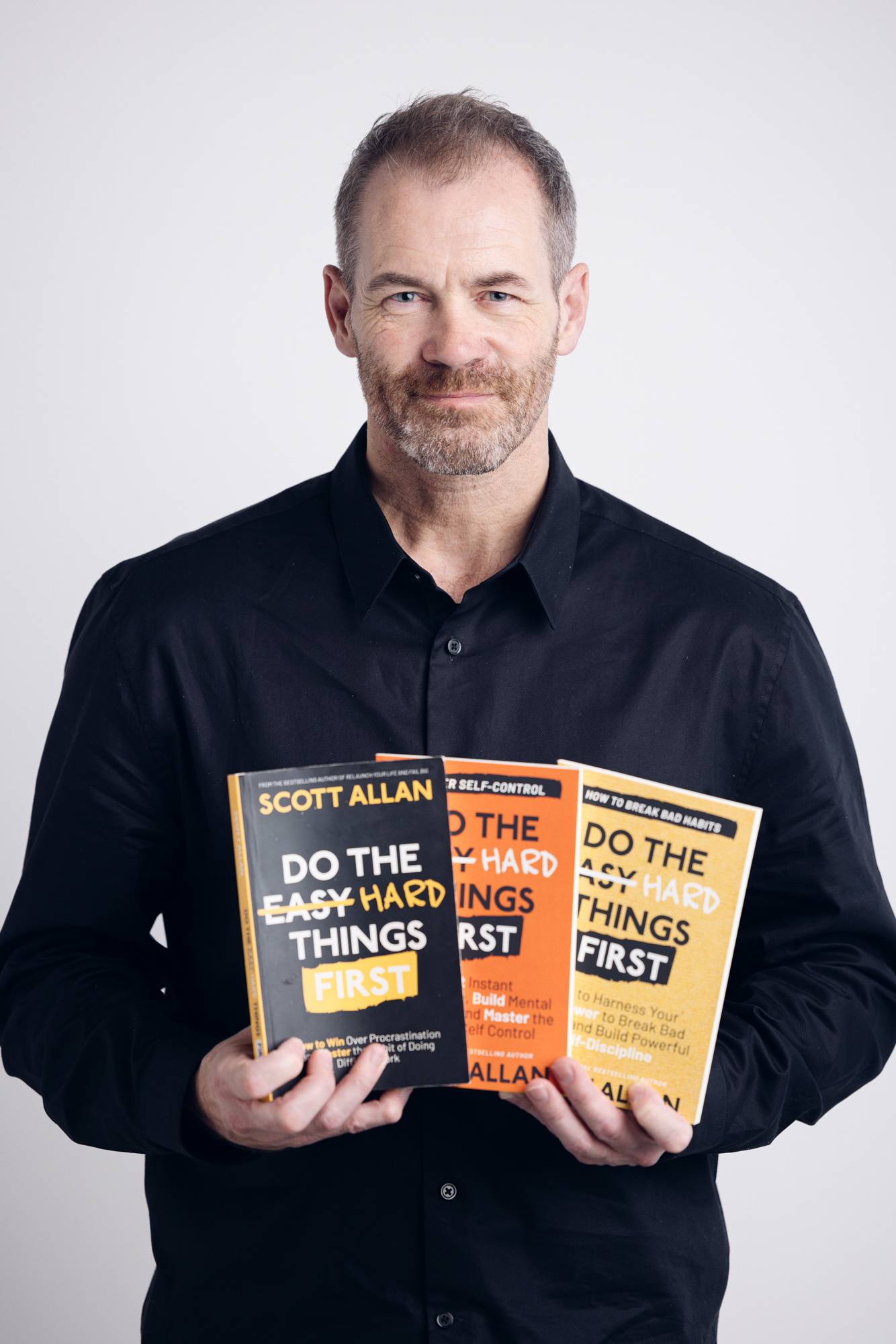
Avoidance is the core obstacle Do the Hard Things First was written to address. The book gives you the complete system for identifying what you're avoiding and facing it—so you can build the life you actually want.
→ Get it at scottallanbooks.com
The Discipline Accelerator
Use Promotional code founding50 to grab your discount
scottallanacademy.com
When You’re Ready, Here’s How I Can Help You:
1. 📚 Buy My Books Direct (and Save Big on Bundles)
Get instant access to all of my bestselling
Do the Hard Things First™ books and
Bulletproof Mindset Mastery Series books— including exclusive bundle deals and direct-from-the-author pricing.
👉
Shop the Full Bookstore »
3. ⬇️ Download Free Training Resources to Get Started Right Now
These quick-start toolkits are designed to solve one problem at a time:
4.
📚 Get the Book: Do the Hard Things First
The complete system for building discipline, crushing procrastination, and becoming someone who executes without hesitation. This isn't theory—it's the exact framework I used to build a publishing empire of 70+ books while living on my own terms.
👉
Get it on Amazon |
Shop Direct at ScottAllanBooks.com
Zero Procrastination Toolkit – End task avoidance and take immediate action.
👉
Download Now »
Fearless Confidence Toolkit – Crush Self-Doubt and Make Bold Decisions Faster.
👉
Download Now
 |
$5.00
Scott Allan
Hi, I'm Scott Allan...
Thank You for Your Support!
Your encouragement and support mean the world to me. If you’ve found... Read more |


